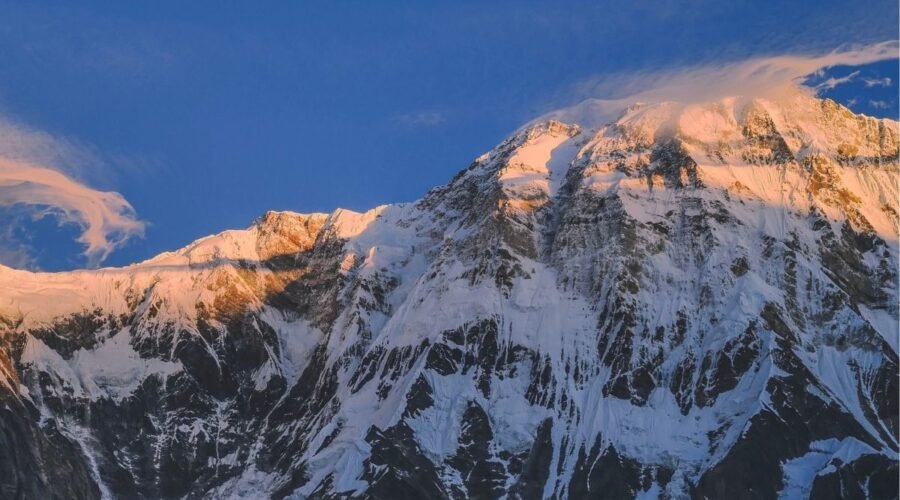
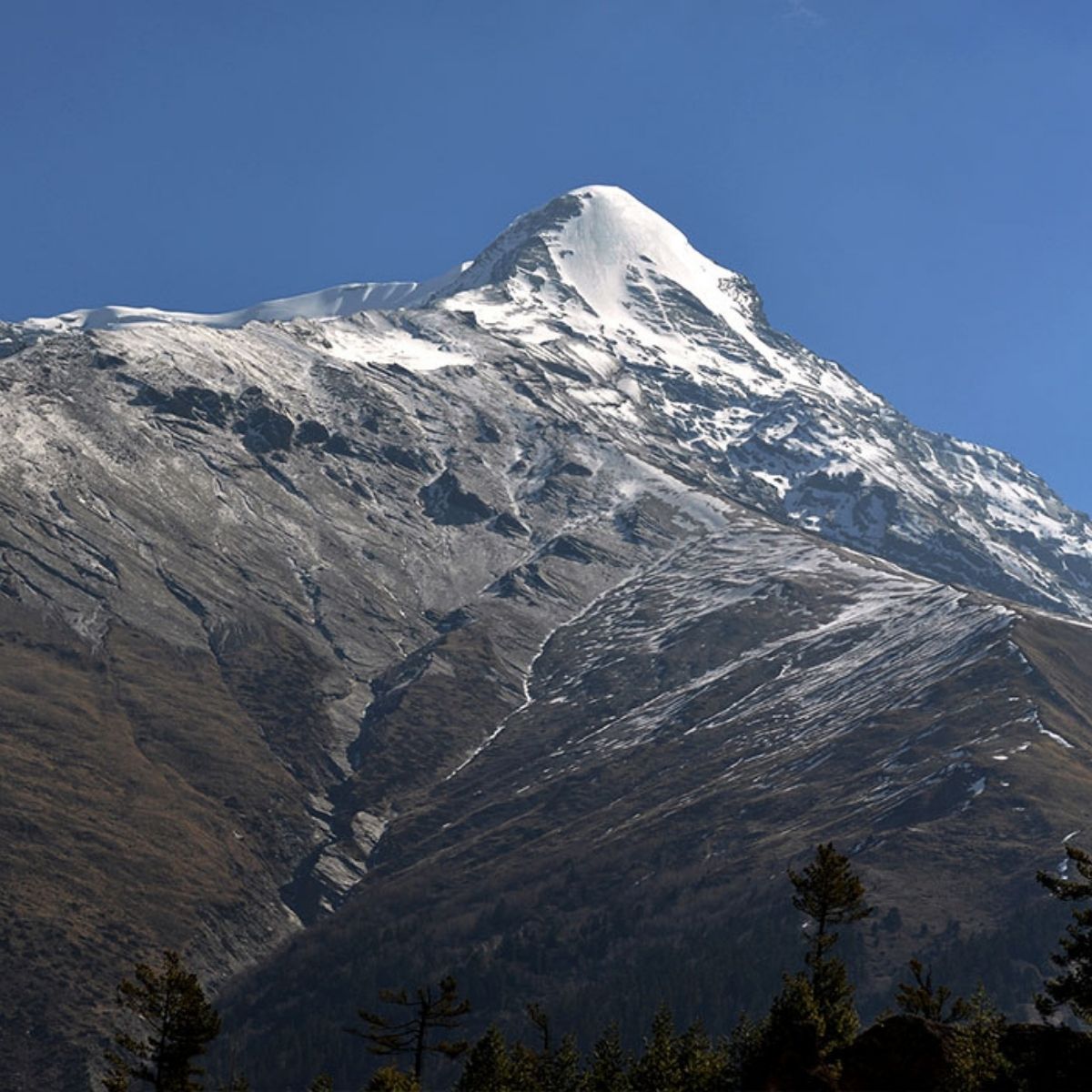
Pisang Peak (6,091 m) is one of Nepal’s most accessible and spectacular 6,000-meter peaks, located in the Annapurna region. This expedition combines a beautiful acclimatization trek along the legendary Annapurna Circuit with a true alpine climbing experience on snow and ice, finishing with an exciting and panoramic summit ridge. Ideal as a first 6,000-meter peak, it offers breathtaking views of the Annapurna massif and a complete high-mountain adventure in a wild and majestic setting.
Climbing Pisang Peak (6,091 m) is a true Himalayan adventure that blends cultural trekking with real alpine climbing. The journey begins with a scenic drive from Kathmandu to the Annapurna region, followed by several days of trekking through traditional mountain villages, forests, and high-altitude landscapes as you gradually acclimatize.
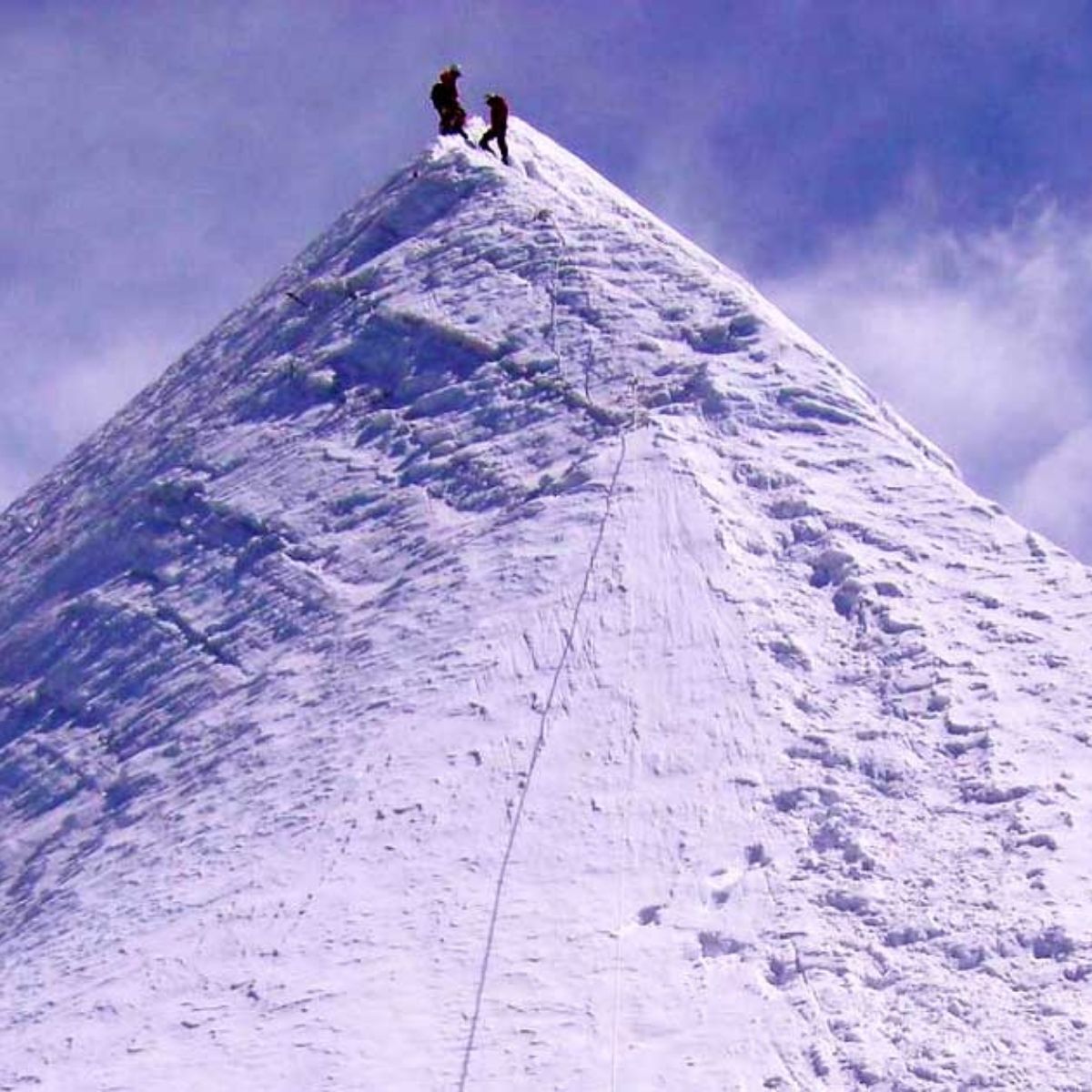
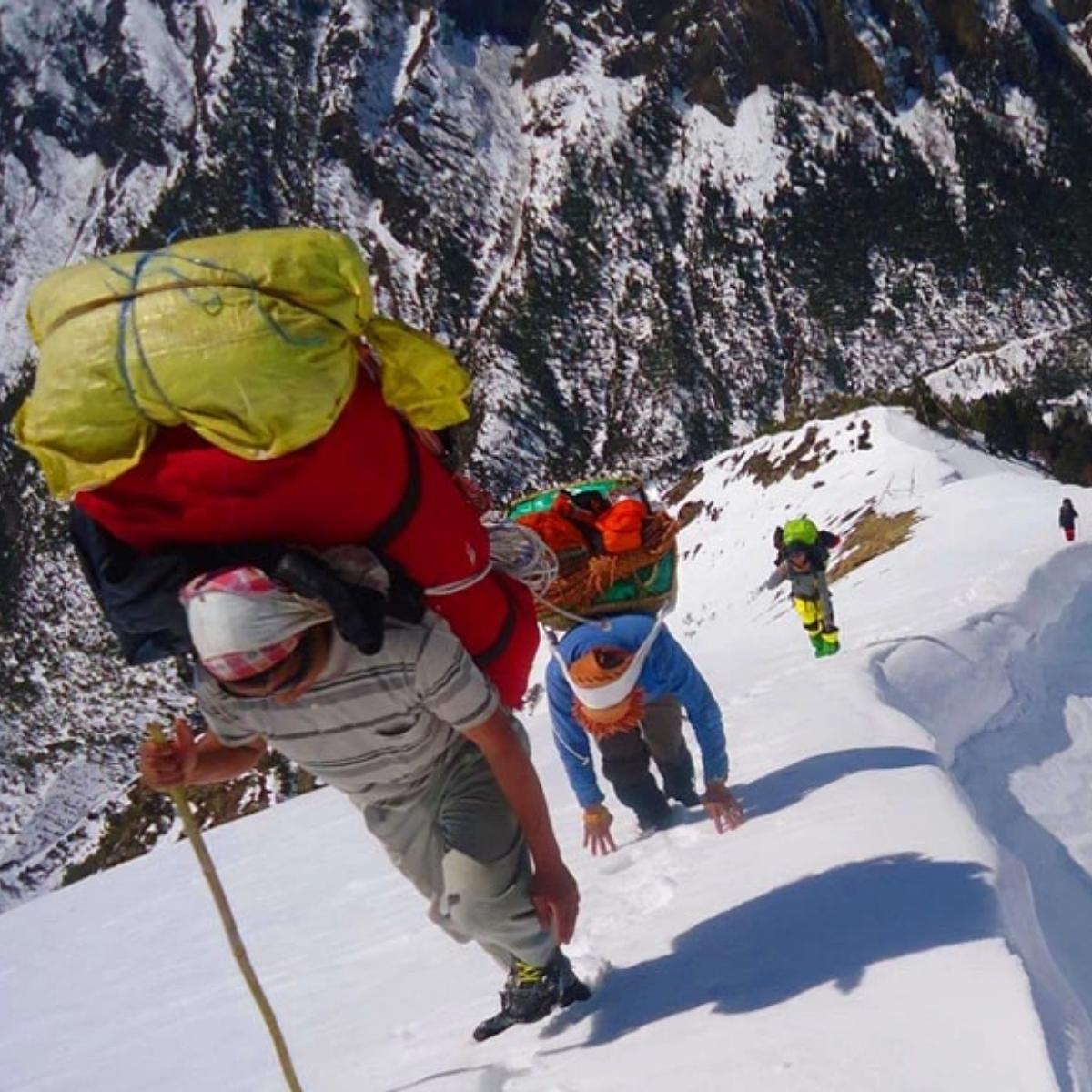
From Base Camp onwards, the expedition becomes more technical. Expect snow slopes of up to 40–45°, fixed ropes on steeper sections, and an early alpine start for the summit push. Summit day is physically demanding but incredibly rewarding, with breathtaking panoramic views over the Annapurna range.
This is not just a trek — it’s a genuine mountaineering experience designed for strong trekkers ready to step into high-altitude climbing in a safe and well-supported environment.
The day before our expedition begins, we’ll gather for a memorable welcome dinner. It’s a perfect occasion for us to connect and become acquainted with one another before we set off on our exciting adventure. This dinner also provides a valuable opportunity for you to approach your guide with any final questions or concerns you may have.
7h 30min
Our trekking journey begins. From Kathmandu, we’ll take a 5h ride to Besisahar, where we’ll have lunch. Then, we’ll continue our adventure by jeep, traversing the scenic route of Besisahar-Chame Sadak for about 2h 30min, passing through Khudi Bazar, Bhulbhule, Lampata and Syange. We will enjoy the drive, witnessing rivers and encountering local communities along the way. Finally, we’ll reach Jagat, our overnight stop, nestled amidst charming towns and villages.
7h – 778m ascent – 137m descent – 15km distance
After a hearty breakfast, we embark on a 15km trek lasting around 7h including our breaks. The trail leads us through stunning terraced fields and enchanting villages. Along the way, we’ll encounter the mesmerizing Octopus and Chyamche waterfalls, as well as the picturesque Taal Village. Before reaching Dharapani, our stopover for the night, we’ll immerse ourselves in the mountain’s captivating magic. Rest assured, Dharapani welcomes us for a peaceful overnight stay.
6h 30min – 1,090m ascent – 318m descent – 15.5km distance
We’ll embark on a beautiful yet challenging trek to Chame, where breathtaking mountain views of Lamjung Himal, Annapurna II and Annapurna IV await. The trail involves steep ridge walking and crossing landslides, making it an exhilarating journey of approximately 6h 30min including our breaks. As we leave Dharapani, the lush forests with pine, fir, oak and maple trees guide us alongside the Marsyangdi river. We will reach Chame, the district headquarters of Manang, surrounded by vibrant green forests and awe-inspiring mountain views. We’ll prepare for a rewarding overnight stay in Chame, immersed in nature’s splendor.
5h 30min – 1,166m ascent – 518m descent – 13.2km distance
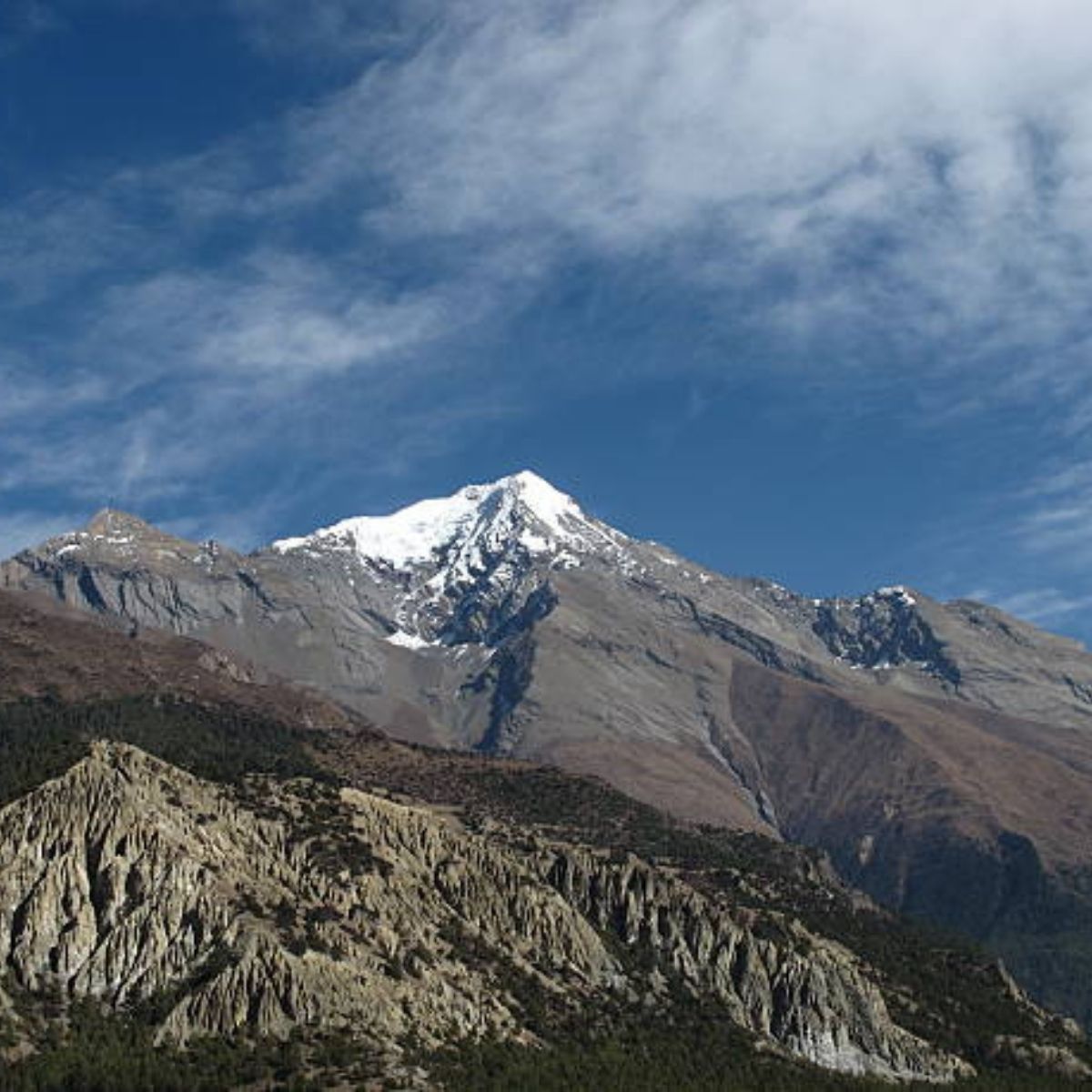
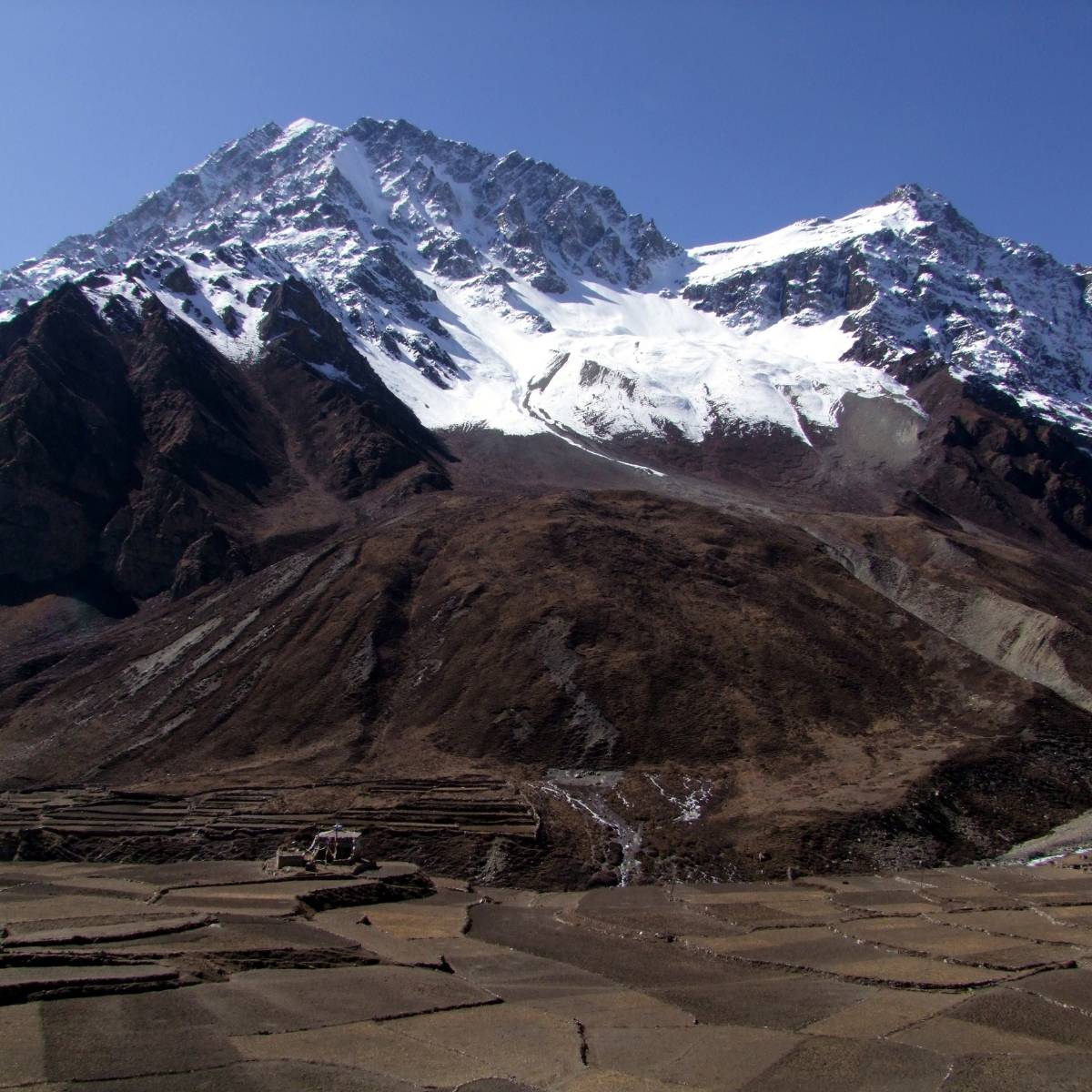
After breakfast, we’ll embark on a journey through a steep and narrow valley. As we traverse the trail along high mountain slopes, we encounter the village of Bhartang (2,950m) where we’ll pause for a rest. Notably, Bhartang is home to Nepal’s largest apple farm. We will be eagerly anticipating our first glimpse of the majestic Paungda Danda Rock. This sacred rock formation rises 1,500m above the Marshyandi river, showcasing its awe-inspiring curved face. From the trails, we are treated to unobstructed vistas of AnnapurnaII to the south and Pisang Peak to the northeast. Our path then descends, guiding us to the picturesque Manang Valley floor, where the charming village of Pisang awaits us. We will spend the night there, embracing the tranquility of the surroundings. We’ll savor this day’s adventure, immersing ourselves in the grandeur of nature and the cultural significance of the Paungda Danda Rock.
4h 30min – 1,080m ascent – 8km distance
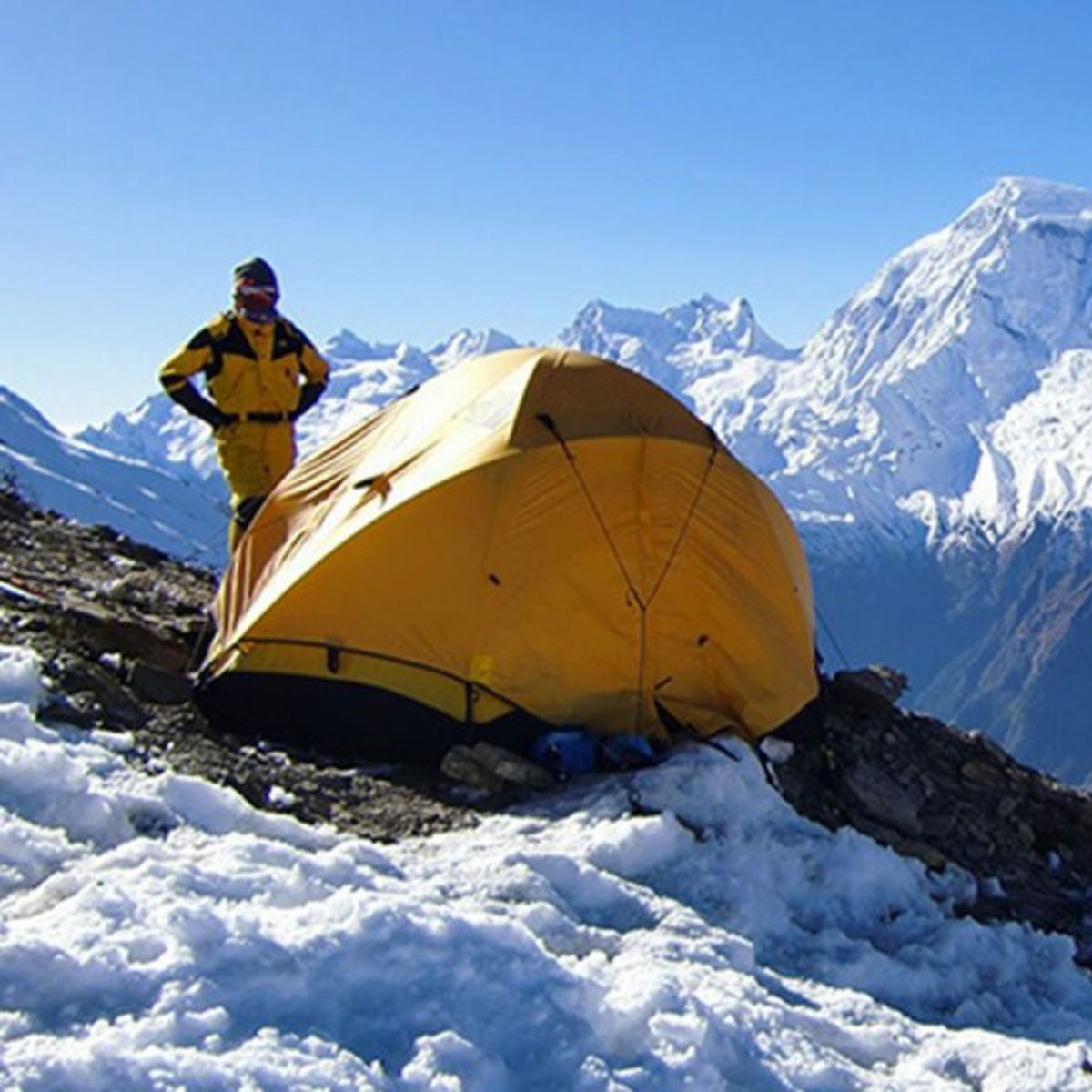
We leave Upper Pisang and climb steadily through alpine meadows and yak pastures. The terrain gradually becomes more rugged and open, offering stunning views of the surrounding peaks. The trek to Base Camp takes approximately 4–5h at a moderate pace, allowing for acclimatization along the way. Upon arrival at Base Camp (4,380m), our tents are already set up and ready, so we can relax and prepare for the upcoming climb. The panoramic mountain views make this a memorable stop and the perfect introduction to high-altitude mountaineering. Overnight in tents.
After arriving at Base Camp (4,380m), we take a short acclimatization hike to higher ground, gaining 200–400m in altitude. The trail passes alpine meadows and rocky terrain, offering stunning views of the surrounding peaks. We return to Base Camp to rest, hydrate, and prepare for the climb to High Camp the next day. Overnight in tents.
4h 30min – 1,000m ascent – 5om descent – 5km distance
A shorter but steeper ascent takes us from Base Camp (4,380m) to High Camp (5,400m), traversing rocky terrain and alpine slopes with spectacular views of the Annapurna and Manaslu ranges. Upon arrival at High Camp, we conduct a pre-climb mountaineering training with our specialized guides, practicing the proper use of all climbing gear. This ensures everyone is familiar with the equipment and prepared for the summit push. Overnight in tents at High Camp.
9h – 700m ascent – 1,70om descent – 10km distance
We start early from High Camp (5,400m) and climb to the summit using ropes and crampons. After reaching Pisang Peak (6,091m) and enjoying the 360° mountain views, we descend carefully back to Base Camp. Overnight in tents or a nearby teahouse.
One day is kept in case there is bad weather on the summit day or in case of illness in the group.
If everything goes smoothly, this day will be skipped and the itinerary continues directly to the next stage. Please note that this day is included in the program and no refund is provided if it is not used.
6h – 100m ascent – 860m descent – 15km distance
After resting at Base Camp, we descend gradually towards Manang (3,540m). The trail passes through alpine meadows, rocky paths, and small villages, offering beautiful views of the surrounding peaks and glaciers. The trek takes 5–7h, depending on pace and breaks. Upon arrival in Manang, the district headquarters of the region, we settle into teahouses and enjoy a well-deserved rest.
4h – 4,050m highest altitude – 10.4km distance
On day 7 of our Annapurna Circuit Trek, after breakfast, we will begin our journey from Manang to Yak Kharka. The distance is around 10.4 kilometers, and it will take us about 4 hours to walk. The trail gradually goes uphill along the Thorong Khola, passing through Tangki Manang and Ghusang at an elevation of 3,900 meters. We will continue through Ghyanchang until we reach Yak Kharka, which is at 4,018 meters above sea level. As we go higher, the landscape changes to a barren wasteland with grass, bushes, and rocks. This part of the trek offers stunning views, quaint villages, and a chance to experience the local culture. It will be a memorable day as we make our way to Yak Kharka.
6h – 1,076m ascent – 305m descent – 10.8km distance
Our journey continues from Yak Kharka, as we embark on a steady uphill trek that leads us to Thorong Phedi, the last village before the formidable Thorong La Pass. From there, we press onward towards Thorong Base Camp. As we ascend, the mesmerizing views of majestic mountains unfold before us, revealing the grandeur of Gudang, Syagang, Khatungkan and Thorong Peak. Today’s leg of the trek proves to be relatively more challenging due to the increasing altitude. Finding solace in a cozy teahouse, we prepare ourselves for the exhilarating ascent of Thorong La Pass, eagerly anticipating the early morning adventure that awaits us. We’ll stay at Thorong High Camp.
8h – 630m ascent – 1,728m descent – 13.4km distance
Today’s trek presents the ultimate challenge as we conquer Thorong La Pass, one of the highest passes in the world and the pinnacle of our journey. Rising at 4am in Thorong High Camp, we brave the harsh elements and high altitude, determined to surpass our limits. Upon reaching Thorong La Pass, a magnificent reward awaits. The breathtaking scenery unfolds before us, with Himalayan peaks stretching towards Tibet in the north, while Annapurna stands tall behind us. Nature’s grandeur leaves us in awe. Descending from the pass, we make our way to Muktinath, a revered site for both Hindus and Buddhists. Known as Chumig Ghasa, meaning “Hundred Waters” in Tibetan, Muktinath boasts 108 stone sprouts that channel the icy waters of Kali Gandaki. Amidst this sacred place, an eternal flame has burned for over 2000 years, further enriching the spiritual atmosphere. This leg of the journey encapsulates the triumph over challenges and the profound connection to nature and spirituality.
5h 30min
After undertaking a spiritually enriching pilgrimage to Muktinath Temple, we press onward on our journey, this time aboard a local bus bound for Tatopani. The ride proves to be a thrilling adventure as we navigate through rugged terrain adorned with winding roads, traversing a region renowned for harboring the world’s most profound gorges. Our path leads us through the lively Jomsom Bazaar, bustling with vibrant energy, until we eventually arrive at our desired destination of Tatopani, celebrated for its tranquil and natural hot springs. As the daylight gradually fades, the allure of indulging in these invigorating thermal waters becomes an irresistible proposition, providing a sublime way to conclude the day’s events. We choose to stay overnight in Tatopani, embracing the soothing ambiance and allowing ourselves to fully immerse in the serenity of this remarkable place.
5h 30min
On our final day of the trek, we embark on an exciting bus journey from Tatopani to Pokhara, anticipating an approximately 5-6h expedition. The road conditions may be challenging initially until we reach Maldhunga, but as we continue along the Baglung-Pokhara highway, the path becomes smoother. Throughout the bus ride, we are treated to a mesmerizing kaleidoscope of ever-changing landscapes and encounters with the warm-hearted locals. The journey itself becomes an enriching experience, allowing us to soak in the beauty of the surroundings and connect with the vibrant culture.



Spring (March-May): Spring is one of the best seasons to climb Pisang Peak. The weather is generally stable, temperatures are pleasant, and the trails are filled with blooming rhododendrons and beautiful mountain landscapes. Visibility is usually excellent, offering stunning views of the Annapurna range. Early March can still be cold at higher altitudes, while occasional rain may appear towards the end of May. Temperature: -10°C to 12°C.
Summer/Monsoon (June-August): Summer in Nepal brings the monsoon season, making trails muddy, slippery, and more challenging. Clouds and rainfall often reduce mountain visibility, and landslides can affect some sections of the route. Due to these conditions, we generally do not recommend climbing Pisang Peak during this season, although late August can sometimes offer improving weather conditions. Temperature: 5°C to 18°C.
Autumn (September-November): Autumn is considered the ideal season for climbing Pisang Peak. The skies are usually clear, rainfall is minimal, and the mountain views are at their best. The forests and valleys remain lush after the monsoon, creating spectacular scenery throughout the trek. Early September may still have occasional rain, while higher elevations can begin receiving light snowfall in late November. Temperature: -8°C to 10°C.
Winter Season (December-February): Winter brings heavy snow and freezing temperatures to the higher sections of the climb. Trails can become icy and more technical, and extreme weather conditions may make the summit unsafe. For the safety of our clients, we generally do not operate Pisang Peak climbs during the peak winter months, although early December and late February may still be possible depending on conditions. Temperature: -18°C to -5°C.
The weather in the high Himalayas is unpredictable and can change rapidly at any time of year.
Health insurance is compulsory for the climb. All the climbers must provide a copy of their comprehensive travel insurance policy certificate. The policy must cover medical and emergency repatriation – including helicopter rescue and evacuation expenses at high altitudes.
Climbing members are kindly requested to send their detailed insurance information after expedition booking. In case of emergencies, we will be using the insurance policy and informational documents you sent us. It will help us arrange a quick and effective rescue operation, transfer for emergency medical help, etc. Please ensure that your insurance covers all costs incurred during mountain rescue service.
Before buying travel insurance, make sure to call the insurance company and recheck if they have heli-rescue at high altitudes.
Proper acclimatization is essential for climbing Pisang Peak, as altitude sickness can affect climbers at high elevations and requires immediate attention if symptoms become severe. During this expedition, you will gradually gain altitude following the itinerary through the Annapurna region, allowing your body time to adapt naturally before the summit attempt.
Our experienced climbing guides will provide basic training on the use of climbing equipment such as ropes, ice axes, crampons, harnesses, climbing boots, and other technical gear required for the ascent. Although Pisang Peak is considered a beginner-friendly trekking peak, good physical condition and some previous trekking experience are highly recommended. Prior mountaineering experience is helpful but not mandatory.
Your safety is always our highest priority. Our climbing leaders and guides are highly experienced in high-altitude expeditions and trained in first aid and mountain safety procedures. If a climber shows serious symptoms of altitude sickness or any other health issue, the safest and most effective solution may be immediate descent. In such situations, the climb leader has full authority to decide whether to continue or descend based on the condition of the climber and the overall safety of the group.
We recommend bringing a reusable water bottle or container with one liter capacity, as well as a thermos (insulated bottle) to keep hot water or tea during the trek. In the teahouses, it is possible to buy boiled drinking water to refill your bottle. Another option is to refill water from natural fountains along the trail or directly from the taps in the teahouses, where the water usually comes straight from natural mountain sources. Although some travelers prefer to use water purification tablets or filters as an extra precaution, they are completely optional and can easily be purchased at pharmacies in Nepal before the expedition.
Pisang Peak is one of the most popular trekking peaks in the Annapurna region of Nepal, first successfully climbed in 1955 by a German expedition team. The peak lies on the classic Annapurna Circuit route and has since become a well-known objective for climbers looking to experience their first Himalayan ascent. Its climbing history is closely linked to the exploration of the Annapurna region in the mid-20th century, when several European expeditions began mapping and opening routes through the valleys of Manang and surrounding peaks, helping establish the area as one of the most important trekking and mountaineering regions in Nepal.
Climbing Pisang Peak is a moderately challenging trekking peak, suitable for fit and active trekkers looking for their first Himalayan summit experience. Daily trekking usually ranges from 5 to 7 hours, depending on the route and itinerary, with regular breaks to rest and enjoy the surrounding mountain scenery.
The route includes sustained ascents, steep descents, and rocky alpine terrain, especially as you approach higher altitude sections. The fitter you are, the more comfortable and enjoyable the experience will be, and prior trekking or hiking experience is considered an advantage.
We do not recommend this climb for people with serious medical conditions, such as heart or lung disease, or other conditions that could be aggravated by high altitude. Good overall health, endurance, and proper preparation are essential to safely enjoy the expedition.
Each day on the expedition to Pisang Peak offers a unique trekking experience, combining walking, acclimatization, mountain scenery, and cultural exploration in the Annapurna region. Throughout the journey, your experienced and qualified guide will accompany you, providing information about the route, landscapes, and local villages.
The day usually starts with an early morning hot tea or coffee, followed by a healthy breakfast. We typically begin trekking between 7:00 and 8:00 am, depending on the length and difficulty of the day. After around 3 to 4 hours of walking, we stop for lunch along the trail, followed by a well-deserved rest before continuing.
The afternoon trek is usually shorter, around 2 to 3 hours, until reaching the overnight teahouse or camp. Once there, you can relax or explore the surrounding area before nightfall.
Dinner is normally served between 6:00 and 7:00 pm, followed by a relaxed evening with the group. The expedition leader will give a daily briefing for the next day’s plan, and you can spend the rest of the evening reading, playing cards, or simply resting. Many travelers also enjoy learning a few words of Nepali from the crew before heading to bed for a well-earned rest.
During the expedition to Pisang Peak, you will usually find internet access in most teahouses, available for a small service charge, allowing you to stay in touch with family and friends during the lower sections of the trek.
As we gain altitude, communication becomes more limited, and we mainly rely on mobile phone networks, although signal coverage in high mountain areas can be weak or intermittent. If you wish to use a local SIM card, it is best to purchase it directly at the airport in Kathmandu upon arrival, as it is the easiest and fastest option.
For safety and coordination, our team maintains daily communication through the trek leader, ensuring that all members are safe, accounted for, and well-supported throughout the expedition.
For Nepali culture, tipping is widely accepted and appreciated. However, it remains entirely at the traveler’s discretion and should reflect the quality of service received and the length of the expedition.
After completing this expedition, if you may want to stay a couple of days extra in Nepal, we can organize other activities for you, including sightseeing tours in Kathmandu, Pokhara trip, Chitwan jungle safari, paragliding, rafting, canoeing, yoga, etc.